Orthodox Christians honor the Virgin Mary because of who her Son is. She is the Theotokos (thay-o-TOH-kos), the one who gave birth to God the Son in the flesh, and so she stands at the center of the Incarnation, the event by which God became man to save the world. She is also the clearest example of a human being saying yes to God, the mother Christ gave to His disciples from the cross, and the one whose prayers Christians have asked for since the early centuries. She is a human being, not a goddess, and she is never worshipped. She is honored above every other creature because of the Child she bore and the faith with which she bore Him.
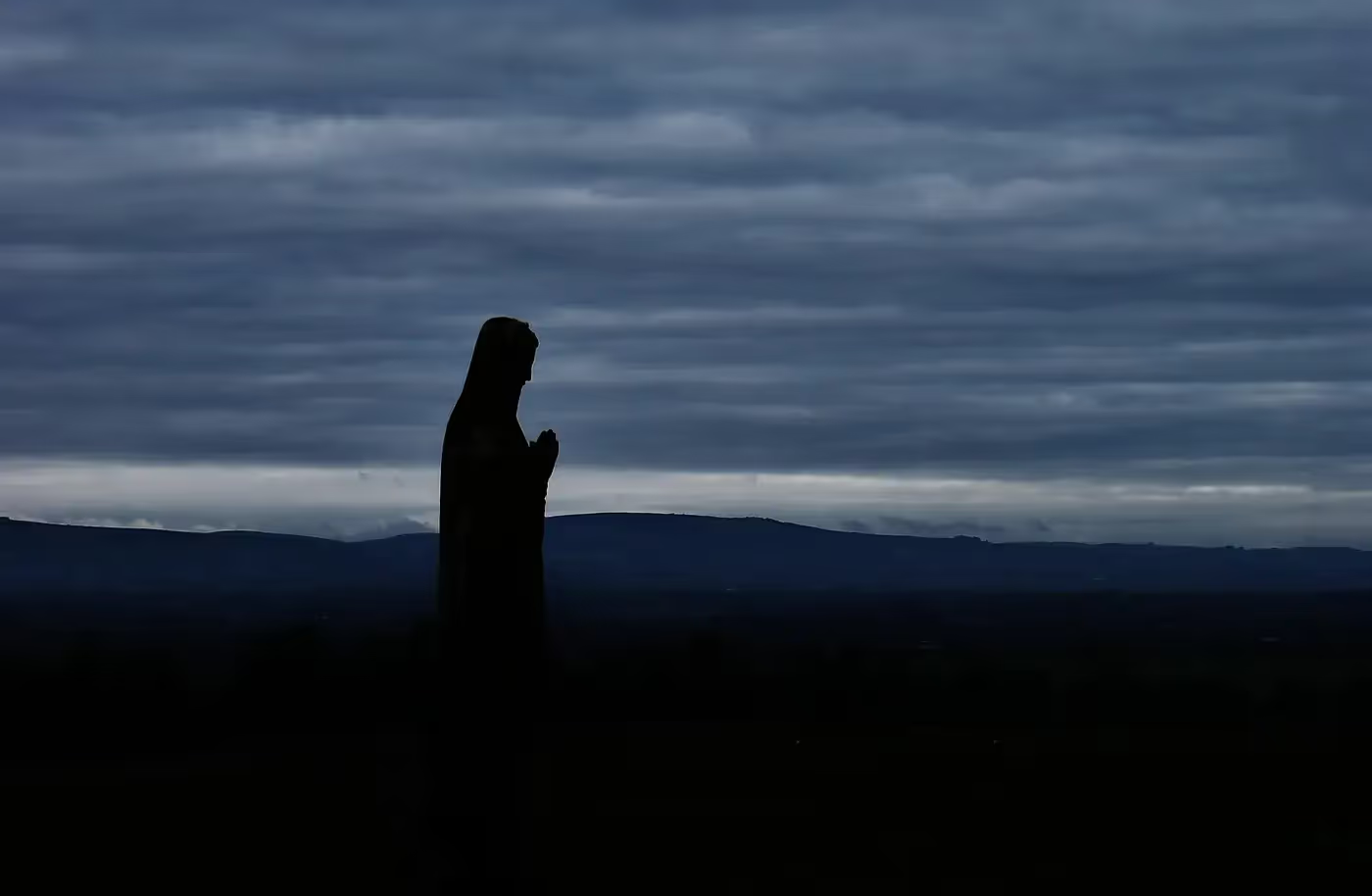
She Is the Mother of God
Everything the Orthodox Church says about Mary begins with Christ. Jesus is not a man in whom God came to dwell, nor God wearing a human disguise. He is one person, the eternal Son of God, who took a full human nature from His mother. Since the One she carried and bore is God, the Church calls her Theotokos, “God-bearer,” or Mother of God.
That title does not mean Mary existed before God or gave Him His divinity. The Son is eternal; what He received from her was His humanity, His flesh and blood. Mary herself is fully and only human, a daughter of Adam and Eve who needed her Son as Savior, as she says herself: “my spirit has rejoiced in God my Savior” (Luke 1:47). When the title was challenged in the fifth century, the Third Ecumenical Council, at Ephesus in 431, upheld it precisely to protect the truth about Christ. Do Orthodox Christians worship Mary? tells that story in full.
Her Yes: The Model of Faith
When the angel Gabriel came to her in Nazareth and told her she would bear the Son of the Most High, she asked how this could be, and then answered: “Behold the maidservant of the Lord! Let it be to me according to your word” (Luke 1:38). God did not force the Incarnation on the world. He asked, and a young woman from an obscure village consented with her whole life.
For Orthodox Christians that consent is the pattern of all faith. Salvation is God’s work, but He does not do it to us without us. Mary heard the word of God, believed it, and kept and pondered it in her heart (Luke 2:19). She stayed faithful through the sorrow Simeon foretold, when “a sword will pierce through your own soul also” (Luke 2:35). She stood by her Son at the cross when most of His disciples had fled, and she was praying with the apostles in the upper room before Pentecost (Acts 1:14). That is why the Church holds her up as the first and greatest of Christ’s disciples and a model for every believer, men and women alike.
The New Eve
From the second century onward the Fathers compared Mary to Eve. St. Justin Martyr drew the parallel in his Dialogue with Trypho, and St. Irenaeus of Lyons put it most memorably: “the knot of Eve’s disobedience was loosed by the obedience of Mary. For what the virgin Eve had bound fast through unbelief, this did the virgin Mary set free through faith” (Against Heresies 3.22.4). As Christ is the new Adam (1 Corinthians 15:45), His mother is the new Eve. The first mother of the human race listened to the serpent and turned away from God; the mother of the new humanity listened to the angel and turned toward Him.
What Scripture Says About Her
The Gospels say more about Mary than people sometimes notice. The angel greets her: “Rejoice, highly favored one, the Lord is with you; blessed are you among women!” (Luke 1:28). Her relative Elizabeth, filled with the Holy Spirit, calls her “the mother of my Lord” (Luke 1:43). Mary herself prophesies that “henceforth all generations will call me blessed” (Luke 1:48), a prophecy Orthodox Christians take as something to fulfill.
At the wedding in Cana she brings the need of others to her Son and tells the servants, “Whatever He says to you, do it” (John 2:5), the last words of hers that the Gospels record. And from the cross Christ entrusted her to the beloved disciple: “Woman, behold your son!” and to the disciple, “Behold your mother!” (John 19:26-27). The Church has always read that moment as more than a family arrangement. In the beloved disciple it sees every faithful disciple, and so every Christian is given Mary as mother.
Ever-Virgin and All-Holy
The Orthodox Church calls Mary “Ever-Virgin,” confessing that she remained a virgin before, during and after the birth of Christ, a title the Fifth Ecumenical Council used of her in 553. Those whom the Gospels call the Lord’s “brothers” are understood as relatives, in Orthodox tradition most often as children of Joseph from an earlier marriage. In the Greek tradition she is also called Panagia, “All-Holy,” and Orthodox tradition holds that she committed no personal sin, by God’s grace and her own free cooperation with it.
Orthodoxy does not, however, accept the Roman Catholic dogma of the Immaculate Conception, which teaches that she was preserved from original sin from the moment of her conception. Orthodox Christians understand her holiness as the fruit of grace freely received over a life of faith, not as an exemption from the human condition that her Son came to heal. Her death and glorification are celebrated on August 15 as the Dormition, her “falling asleep.”
How Orthodox Christians Honor Her
Mary is woven through the whole of Orthodox worship. Four of the Church’s twelve Great Feasts are hers: her Nativity (September 8), her Entry into the Temple (November 21), the Annunciation (March 25) and the Dormition (August 15), which is preceded by a two-week fast. Nearly every service includes a hymn to her, and at most Divine Liturgies the Church sings that she is “more honorable than the Cherubim and beyond compare more glorious than the Seraphim.” The Akathist Hymn, a long hymn of praise from the Byzantine era, is sung on the Fridays of Great Lent in many parishes.
Her icon stands to the left of the central doors of the iconostasis in every Orthodox church, with Christ’s on the right. Many churches also show her in the apse above the altar with the Christ Child before her, an icon called the Platytera, “more spacious than the heavens,” because she held in her womb the One whom the heavens cannot contain. In Orthodox homes her icon sits beside Christ’s in the prayer corner. Bowing before her icon and kissing it are acts of honor, not worship, a distinction the Seventh Ecumenical Council made explicit, and this article on icons in Orthodox worship explains it further.
Asking for Her Prayers
Orthodox Christians ask the Theotokos to pray for them, as they would ask a friend, but with far greater confidence, because she is the mother of the Lord and alive in Him. Many prayers end with the words “Most holy Theotokos, save us.” That does not make her the source of salvation. It asks her to save us in the sense St. Paul meant when he said he had become all things to all people “that I might by all means save some” (1 Corinthians 9:22): by her prayers and her help, always leading people to her Son.
The practice is very old. The earliest known prayer to Mary, preserved on a papyrus fragment usually dated to the third or fourth century, already asks for her protection: “Beneath your compassion we take refuge, O Theotokos.” Orthodox Christians still sing it today.
She Always Points to Christ
One of the most common icons of Mary is the Hodegetria, “She Who Shows the Way.” She holds the Christ Child on one arm and, with her other hand, points to Him. That is the whole of Orthodox devotion to her in one image. She is not the destination but the one who shows the way, and her last recorded words still sum up her message: “Whatever He says to you, do it.” Orthodox Christians love her because she loves her Son, and because in her they see what God intends for every human being who receives Him.
Common Questions
Do Orthodox Christians worship Mary?
No. Worship belongs to God alone. Orthodox Christians honor Mary above all other saints and ask for her prayers, but they never worship her, and to do so would be idolatry.
Why is Mary called the Mother of God if God has no beginning?
Because the child she bore is God the Son, who took His human nature from her. The title says who her Son is. It does not mean she is older than God or the source of His divinity.
Do Orthodox Christians believe Mary was sinless?
Orthodox tradition holds that she committed no personal sin, by God’s grace and her own cooperation with it. The Orthodox Church does not accept the Roman Catholic teaching of the Immaculate Conception.
Did Mary have other children?
The Orthodox Church teaches that Mary remained a virgin all her life. The “brothers of the Lord” in the Gospels are understood as relatives, most often as Joseph’s children from an earlier marriage.
What is the Dormition?
The Dormition, or “falling asleep,” is the feast of Mary’s death and her passage into heaven. Its hymns proclaim that neither the tomb nor death could hold her, because her Son translated her to life. Orthodox Christians celebrate it on August 15, after a two-week fast.